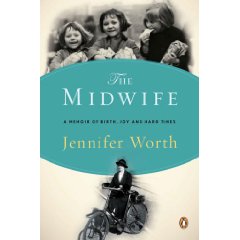
The Midwife: A Memoir of Birth, Joy, and Hard Times
 Imagine yourself living in post WWII England. There are buildings that have been condemned due to safety hazards with people living in them anyway. There are bomb shelters and buildings that have been damaged by bombings. You live in London’s East End and you work with people who you have been sheilded from your whole life. You are a nurse, training to be a midwife and living in a convent with nuns and other nurses. You aren’t too big into religious things so living in a convent with nuns is interesting. You are thankful that you don’t have to go to the services, and yet thankful for living in community with these fascinating women. You go out on a bicycle, your only means of transportation, on daily calls to the people in the East End–mostly in the tennements (otherwise known as slums)–even in the rain. You do prenatal care and help to deliver babies. Sometimes you help the other nurse nun who you don’t get along with too well do patient care visits to the older, sick people in the community. You discover that a family with 10 children can live in a two bedroom flat and that laundry can be hung anywhere and everywhere.
Jennifer Worth, a midwife from the 1950’s did all of these things. This book, The Midwife, is a biography of her life as a midwife. She went to live in the London Docklands to serve a wide community of people as a nurse-midwife. The area she served dealt with fighting, drunkenness, and poverty. The overcrowded area seemed to welcome crime. The people were also hard working, trying to make a living and the men trying to provide for their families.
Her memoir is definitely an interesting read. The chapters are story clips of women whose births she attended, difficult births, families with domestic violence, families with great love for one another, a prostitute, and nuns she worked with. She paints an amazing picture of what life was like back then. I enjoyed learning about some of the history of London and especially enjoyed learning about the Cockney dialect. Her stories are engaging and easy to read.
You don’t have to be a midwife or even particularly interested in “birthy things” to enjoy this book. This book helped me to appreciate some of the modern day conveniences we have as mothers. Indoor toilets, running water, washing machines! Can you imaging having 10 children with no running water in your house and no washing machine? Can you imagine how much of your day would be spent simply washing clothes? It helped me to appreciate the amount of space we have for our own living quarters and that there aren’t abandoned bomb shelters nearby with people doing all sorts of terrible things while my children are outside playing.
One of my favorite chapters is about a woman from Spain, who only speaks Spanish, who is married to a man who only speaks English. Oh, and they have 25 children!!! 25 children! Can you imagine? Their story is heartwarming and leaves you with your jaw dropped.
If you go on Amazon and read the other reviews of the book, I think you’ll want to find your own copy to read.
Share the fun: Email + Del.icio.us + Digg + Technorati

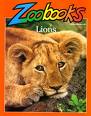


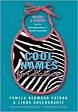 ‘Cool Names’ is a book of lists broken down into four different categories: Mainstream Names, Famous Names, Old Names, and Creative Names. There is a February 2008 edition with a turquoise cover and an August 2003 edition with a red cover. Both are great sources if you are trying to find a name that is a little off the grid. Some of the lists are titled, “Old Lady Cool,” “Neo-Yuppie Cool Names,” and “Foreign Word Names.” Some of the names are completely off the wall, but it is a fun short book to look through.
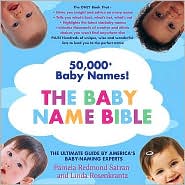 ’50,000+ Baby Names!’ is a great companion book to the authors’ other book ‘Cool Names’ because you can find a name in ‘Cool Names’ and then look up the definition of the name in the this book. It is also a good baby name book just to read through. I like that it puts a gray box and star next to up-and-coming names. It also has an arrow facing up or down next to names to indicate the trend in popularity. In addition to the definition of the name it also gives an opinion about the name and how it is interpreted in our current culture.
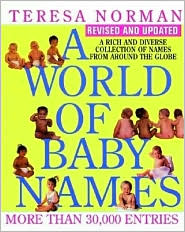 We found our first child’s name, Annabelle, in this book. It was sitting in our doctor’s office and my husband was reading through the Spanish section during a visit and found ‘Anabel.’ We decided to go with the most traditional spelling, but I like how this book is broken down into the origin of the name and gives a whole definition of a name. ‘A World of Baby Names’ is comprehensive and has a lot of names from foreign countries.
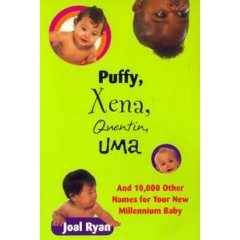 I picked this one up from the library, because it looked interesting. It is not very comprehensive at all. Each chapter titled by a letter begins with advice in a section called ‘Crib Notes’ which contains comments on famous names, ‘Pocket Ts,’ ‘Trendy Suspenders,’ and ‘Think long, think hard.’ Unfortunately this advice is out of date ten years after being published. It also doesn’t seem to give full definitions of the names. Overall this book is okay, but I wouldn’t use it as my sole source of baby name information.
 I found this book in my coat closet left by the previous owners of my house. They knew that we were buying a 4 bedroom to fill it up with kids. They themselves had four children and moved out because the house became too small for them. It seems that I live in a fertile house! ’20,001’ was published in 1999 and is a no-fuss, easy to read baby name book. It has all the mainstream and common names and is great for a quick resource to look up a definition rather quickly.