weebly statistics
Home About Links Contacts Show Show

Homeschooling Options-Today’s Homeschool Families

by Richel on February 2, 2013
category: 5 – 12 years (kid),Education

Homeschooling is not a one-size-fits all method and homeschooling families are as varied as the children they raise. What works best for one family does not necessarily work for another. However, all homeschooling families agree in one area: public education is failing and not the ideal place for raising children.

I realize also that homeschooling my children is a true gift.  I am able to do so because my husband has a great job and because I have been able to successfully work from home.  Our lives are not easy, but for us, this is the right fit.  The truth is, homeschooling is different for everyone.

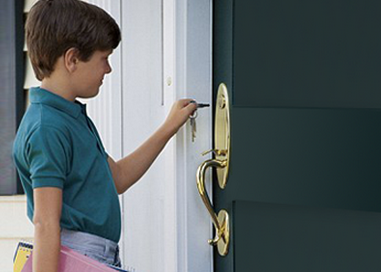
homeschooling

Although homeschooling may seem a novel concept to some, the growth of a 20th century public school education depicted in media as lack luster is more so every day. Our current educational system was created during a whole different time.  We are such a technology based society and world, and sadly our educational system just has not caught up yet.  Today’s homeschooler has a vision for their child’s future.

Early history shows that homeschooling was the norm and many of the world’s greatest leaders, philosophers, scientists, musicians, poets, and thinkers enjoyed a homeschooling education. Some homeschooling families choose to have the mother as teacher while others used a private tutor. The truth is homeschooling is different for everyone.

Homeschooling saw resurgence in the late 70s to early 80s and in the 21st century, is no longer viewed as a strange or foreign educational choice.  We as a society needed alternatives to teach our children and homeschooling became a strong option.  Today’s homeschoolers are not all deeply religious people.  They are regular families, they are famous families, they are families that simple have a different idea of what their kids need.

If you are considering homeschooling here are something to consider:

  • Can you organize your life to make room for educating at home?
  • Are you aware of the state laws for homeschoolers in your area?
  • Can you make time to educate at home?
  • Are you willing to learn something new too?  You might have to teach something you don’t know much about.
  • Is your child-parent relationship open?  Is their good communication?
  • Can you afford to be at home and educate your child.
  • What kind of homeschooler will you be?  Will you use a online public school program like k-12 or will you choose your own curriculum?
  • Can you afford the investment.  If you choose to educate at home you will have some costs associated with buying curriculum, materials and other supplies.

With so many options, programs and unique qualities, if you choose to homeschool then there is an option out there that will fit your needs.  You just need to make the jump and go for it.  Remember every homeschool family takes their program one year at a time, so if you try it for a year and it does not work out for you, you can always go back to a traditional brick and mortar schooling program.  The important thing to remember is that you or your child don’t have to be unhappy with the current state of their educational program.  You can take charge, course a new direction and get back on the path of what education was created for:  to prepare and educate the young people of society and teach them that they can work hard and achieve all the goals they choose too.

Your Child and Social Media

by Sheila on January 28, 2013
category: 5 – 12 years (kid),Pop culture,Practical Tips

Chances are you’re one of the millions of users who log on daily to social media sites such as Facebook to converse with friends, follow the news, or just plain indulge in this socially acceptable habit. If you’re also a mother to a pre-teen, there’s a high probability that he/she also has an account; sometimes with or without parental permission.

Facebook currently restricts the minimum user age to 13 and while mom and dad may say no to signing up online (via their desktop), kids nowadays are accessing the site through their iPhones, iPads, or tablets. Facebook claims to eliminate an average of 800,000 users under the age of 13 a year (this, according to a June 2012 Consumer Reports Survey). However, it’s estimated still that a whopping 5.6 million kids are on Facebook; some with his/her parent’s permission. Surely there must be some good in this. Right?

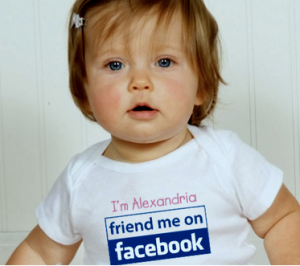
fb baby

Facebook, like its famous predecessor Myspace, allows users to communicate on their own time. This is crucial to a child who may be shy and withdrawn and/or takes time to articulate what they want to say, but can’t, in person. The chat window for instance, helps a child further express themselves and make connections with people they may not feel as comfortable around face-to-face in the school setting, due to peer influence, classroom location, etc.. So then it’s okay to have my child create an online account? That is really up to each parent.

(more…)

Childhood Depression – Helping Your Child Through it

by Tina on April 19, 2012
category: 5 – 12 years (kid)

Children are as prone to depression as adults. Youngsters do not get depressed for the same reasons and not to the same degree as adults but they can get down and feel blue in a similar manner to grown-ups.

Depression is a mental disorder that it was once believed did not affect youngsters at all. Research studies that have looked closely at this over the years have discovered that this is not the case. It has been estimated that as many as three in 100 young children suffer from the effects of depression. Depression in children needs to be acknowledged and addressed the same as it does in adults and an appropriate treatment needs to be undertaken before it leads into a more serious stage.

What Causes Depression in Children?

Just as depression in adults is not necessarily brought on by one particular thing but can be influenced by a number of factors, the same can be said for depression in kids. Childhood depression can come about due to a genetic predisposition towards it. It can also result from a traumatic or stressful event in life such as a death, a new school or a move to a new place. Medications can sometimes bring about depression as can an imbalance of chemistry in the brain. Learned helplessness is also believed to be a potential cause of depression in kids when it works in combination with the type of personality traits that a youngster has.

Seeing the Doctor for a Diagnosis

If your child seems lethargic and is sad and unhappy all of the time and no longer enjoys spending time with his friends or doing the things he use to enjoy doing then it may be time to take him in to see his doctor. The family physician has the training needed to make a proper diagnosis. He can first rule out other physical problems as the cause of the condition.

After examining the child and asking him or her series of questions the doctor will then be able to decide if the child is suffering from depression. If he is then one of the most suitable means of helping a young child is by way of counseling. For children who are quite young play therapy can be very beneficial to helping them to cope with their depressive feelings and thoughts while for older kids cognitive behavior therapy tends to be the most helpful approach to dealing with depression. Sometimes family therapy is recommended or in some cases, interpersonal therapy.

Most doctors do not prescribe antidepressants for their young patients as their brains are still in the developing stages. In the rare cases where medication is prescribed it is used as a last resort and not as the first option for treatment. If medication is used then it is combined with a type of therapy. This is something that as a parent you must discuss with your child’s doctor. You must consider the advantages and disadvantages of every treatment option.

Helping Your Child

As a mother you do not have to sit back and take a passive role as you watch your child battle with depression. As a loving and supportive parent there are plenty of ways in which you can support your child in having the most uplifted mental state possible. To contribute to positive mental health and a better outlook you can do everything possible to ensure that your child eats as nutritiously as possible, gets enough exercise on a daily basis and gets the right amount of sleep. It is also extremely important that you are always available to listen to your child and to talk with him whenever he is feeling sad or upset. Your child needs to know that you are there for him and that he will be heard.

A child who is depressed feels that his world is falling apart and caving in on him. You need to shower him with love and understanding and he needs to know that you are his biggest supporter. Show your child that you are in his corner and let him know that he will get through this difficult period of time in his life with your help.

When Kids Want to Earn Money – Teaching by Example

by Tina on March 15, 2012
category: 5 – 12 years (kid)

Your kids observe the use of money from an early age and want to be able to use it themselves. Teaching them about the importance of money and the exchange of money for goods is a lesson that starts long before they enter school. Children learn quickly about what money is and what it is used for. Before long they want money of their own so they can purchase things that they want to have such as candy and toys. Children also observe the gift giving process at special occasions such as Christmas time and birthdays and want to be able to have some money to take part in this as well.

Off to the Right Start

As a mother you should not be frightened or bothered when you child wants to earn money of his own but you should feel a sense of pride. Everyone must start somewhere when it comes to the use of money and one place that is good for youngsters to start is selling glasses of juice or lemonade for a few cents from a homemade stand that you set up for you child in the front yard. You can oversee the whole process and it can serve as a valuable lesson for your son or daughter.

Another small way to teach your young child about money is if you child wants to sell something that he owns to another child in order to have money to buy something else that he wants even more. You have to make sure that the trade is fair for both children but it serves as a means of teaching your child about how money works.

Whenever you child expresses to you that he or she wants to buy something, whether it be a toy truck, a Barbie doll, a coloring book or an electronic gadget this offers an opportunity to teach you son or daughter about the value of money and about the responsible use of money.

Financial Lessons for Children

You need to teach your little one that money must be earned. Your child learns this by example when he observes you going to work every day or observes you working at home if you run a small business from your residence. You need him to realize that hard work is needed to earn money, as is commitment, energy and lots of effort. Make sure that the money lessons you impart are age appropriate. You do not want to confuse or overwhelm your child when he or she is too young to understand the concepts involving money.

When you give your child an allowance for doing chores around the house this demonstrates how money works and it provides a solid foundation for the equation hard work equals money earned. You need for him to realize that earning money becomes more complicated as you get older and earning a living for a family is different than just having some spending money for the weekend. Once again though, make sure that the financial lessons are suitable for your child’s age.

Talk About Money with Kids

Talk to your child about money and make yourself available to answer any questions he may have. If there are opportunities to get him involved in your money making endeavors then do so. For instance if you are involved in a church or group that has bake sales then let your child join in with helping you bake cookies, cupcakes or muffins. If you help out at book sales or other sales to raise money for good causes then bring your son or daughter along to see how this takes place. You may not be earning the money yourself but when you do this you show him that charitable giving and earning money to help others makes a difference as well.

Stress and Your Children – Five Tips to Help Them to Cope

by Tina on February 20, 2012
category: 5 – 12 years (kid)

Adults have to deal with stress all of the time but do you realize that your children do as well? Children feel the stress of life and it affects them but they experience it in a different manner than do grown-ups. They may not experience it on the same scale as adults do and they may not experience it as often but children feel the pressure of daily living and it can give rise to anxiety, depression, worry and doubts.

girl-biting-nailsChildren worry about making and keeping friends as being well liked is so important to youngsters. They worry about their grades and getting their chores done. They also worry about living up to their parents’ expectations and not disappointing them. As a mother you play an important role in helping your children to cope with stress. Here we offer you some help in the area of stress reduction for your kids:

1. The single most important thing you can do to help your children to effectively cope with stress is to be there for them. Listen to your children when they want to talk about something that is bothering them. Do everything you can to put yourself in their shoes and from there to offer assistance, advice and to help them to come up with a solution to the problem. As adults it is sometimes not an easy feat to try to relate to the concerns that children have but do your very best. Keep in mind that you were once a child too.

2. Encourage your child to get enough physical activity. Exercise can be a stress buster for people of all ages. Make exercise a regular aspect of your child’s day-to-day life. Gym class at school is not enough exercise for your child, especially when he is feeling anxious and worried. Physical activity is not just good for the body but also for the mind as well. Help your child to figure out what kinds of exercise he would like to do and then support him in his choices.

As often as possible join your son or daughter in enjoying exercises together. Go for walks or bike rides. Go swimming in the local pool or shoot a few hoops in the front yard. Play badminton or kick a soccer ball around. Physical activity can clear the mind and can keep stress at a manageable level.

3. Buy your child a diary or journal and encourage him to write in it as often as he or she wants to. Encourage your child to use it as a way to express how they are feeling on paper. This stress reduction technique is called journaling and it can help to relieve stress as it helps a person to get to know themselves better. It also helps them to see their problems in black and white and can provide a means of helping your child to cope with the difficulties he or she is going through. By writing in a journal your youngster may be able to come up with their own methods of dealing with their problems.

4. Your child needs to have time to play, run around and laugh out loud. Encourage your child’s creativity when it comes to his hobbies and do what you can to be enthusiastic and supportive. By having outlets that bring him pleasure and enjoyment your child will develop better coping mechanisms. There is a time for work and a time for play. Ensure that in your home there is a good balance between the two.

5. One of the best defenses against stress is to build a strong immunity system. To do this make sure your child eats a healthy diet that is well-balanced and rich in vitamins and minerals. You should also make sure that your child gets a good night’s sleep. A deficiency in either healthy foods or sleep can lead a child to become irritable or frustrated more easily. A weak immune system can open the door to not only a greater level of stress but also a higher potential for illness.

« Previous PageNext Page »


Advertising:


Blog Ads:


Our Other Sites:


Learn how to advertise here >>

Most Popular Posts

    Sorry. No data so far.

Marketplace